
By Vibroya Editorial Team
Health & Travel · August 20, 2026 · 8 min read
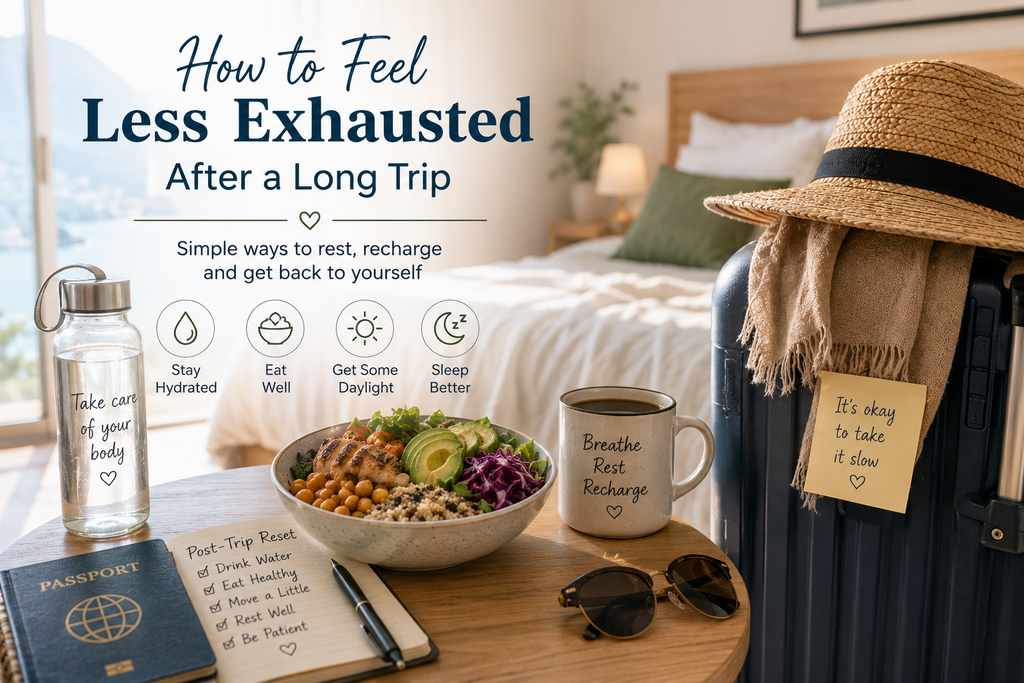
There is a strange moment that happens after a long journey. You finally reach home, drop your bag somewhere near the door and look forward to your own bed. But instead of feeling relieved and refreshed, you feel completely drained.
Your legs may feel stiff from sitting. Your sleep is probably all over the place. You might have eaten at unusual times, drunk less water than you normally do and spent hours moving between airports, stations, cars or hotels.
And then there is the suitcase.
It is sitting there, silently reminding you that the trip isn’t quite finished yet.
Feeling tired after travelling is common. A long journey can disrupt your sleep, eating pattern and daily routine even when you haven’t done anything particularly strenuous. If you’ve crossed time zones, the adjustment can take even longer.
The good news is that getting back to normal usually doesn’t require anything dramatic. A little patience and a return to familiar habits can go a long way.
Let the First Evening Be Quiet
When you get home, there is always something that could be done.
The washing has piled up. The kitchen needs attention. Your inbox is full. Friends may want to know how the trip went. You might even have work waiting for you the next morning.
But if you’re exhausted, you don’t have to deal with everything immediately.
Put away the things you need for the night and leave the rest. Take a shower, change into comfortable clothes and give yourself some time to settle down.
There is nothing wrong with eating a simple dinner and going to bed early.
If your schedule allows it, keeping the first evening quiet can make the next day feel considerably easier.
Start With a Proper Drink and Something to Eat
People often arrive home thinking about sleep before they’ve thought about food or water.
A long journey can make regular meals difficult. Airport food might replace breakfast, a sandwich becomes lunch, and dinner may happen at an unusual hour. On top of that, you may have spent hours without drinking much.
Once you’re home, don’t overcomplicate things.
Have some water and eat a normal meal when you’re hungry.
It doesn’t need to be a “detox” meal or some special recovery recipe. A bowl of rice with vegetables and chicken, eggs with toast, soup, fruit with yogurt, or another familiar meal can be perfectly fine.
After a few days of eating out, something homemade can feel especially good.

You Don’t Need to Undo What You Ate on Holiday
This deserves a separate mention because people often feel guilty after travelling.
Maybe you had dessert every evening. Maybe you tried street food, ordered room service, ate at restaurants or had a few meals that were much heavier than what you normally eat.
That’s what holidays are for sometimes.
There is no need to come home and immediately start skipping meals because you think you need to “make up” for the trip.
Simply return to your usual eating habits.
Add the foods you normally enjoy. Include vegetables and fruit, choose satisfying sources of protein, drink enough fluids and eat regular meals according to your appetite.
One week of holiday food doesn’t define your overall diet.
What you do consistently over time matters much more.
Coffee Helps, Until It Doesn’t
A strong coffee can feel like the perfect answer when you’re exhausted.
You know the feeling. You’re home, there are things to do, your eyes are heavy and you tell yourself that one cup will get you through the afternoon.
Sometimes it does.
The problem is continuing to drink caffeine late into the day and then wondering why you’re wide awake at midnight.
If you’ve crossed time zones, this can be especially frustrating because your body may already be confused about when it should be sleeping.
You don’t have to give up coffee. Just remember that caffeine isn’t a replacement for rest.
If your body is asking for sleep, eventually the coffee is going to lose that argument.

Move a Little Instead of Doing a Hard Workout
After sitting for hours, your body can feel as though it has forgotten how to move.
Your shoulders are tight. Your back isn’t happy. Your legs feel strange.
The answer doesn’t necessarily have to be a workout.
Take a gentle walk. Stretch your calves. Move your shoulders around. Walk around the house while putting a few things away.
If you normally exercise, there’s no need to abandon your routine altogether, but you also don’t need to return with your hardest workout simply because you missed a few sessions while travelling.
A tired body doesn’t need punishment.
Give yourself a little time to recover, then return to your normal exercise routine when you feel ready.
Get Some Daylight
If you’ve been travelling through airports and sitting inside for most of the day, stepping outdoors can feel surprisingly refreshing.
Go for a short walk if you’re feeling up to it. Sit on a balcony or in a garden. Have your morning drink outside. Even a few minutes away from artificial lighting and screens can make the day feel different.
For people dealing with jet lag, exposure to daylight can also be part of helping the body adjust to the new local schedule. Timing matters, though, and the most useful approach can differ depending on how many time zones you’ve crossed and whether you’ve travelled east or west.
So think of daylight as one helpful part of getting back into your routine, rather than a magic solution.
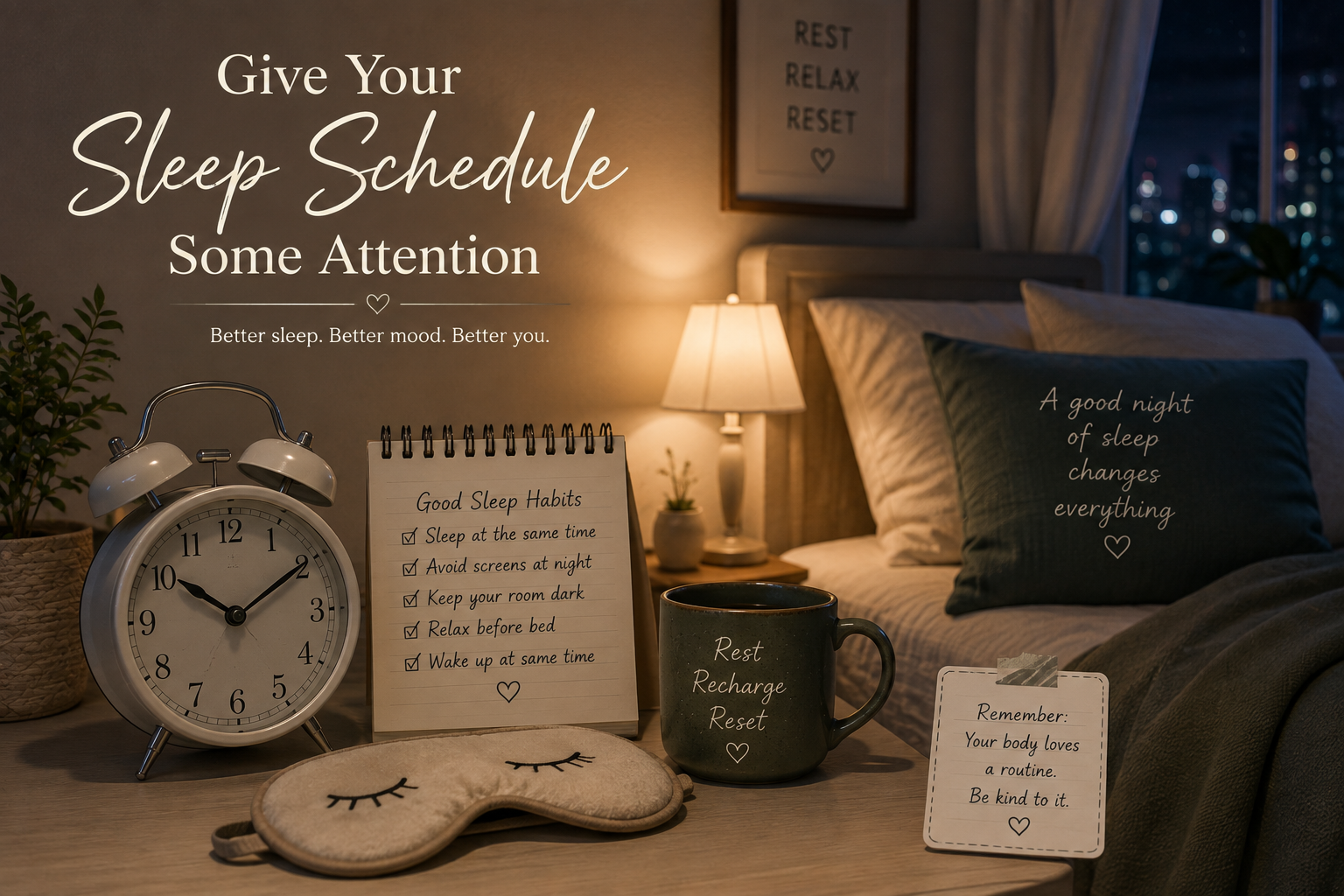
Give Your Sleep Schedule Some Attention
Jet lag can make an ordinary bedtime feel completely wrong.
You might be exhausted at six in the evening and wide awake at two in the morning. Or you may wake up much earlier than usual and feel as though the day has started before your body is ready for it.
Try to move gradually back toward local time.
Keep your room comfortable and dark when it’s time to sleep. Avoid turning every tired moment during the day into a long nap, especially if you’re trying to sleep properly that night.
At the same time, don’t panic if your first night isn’t perfect.
Your body clock doesn’t know that you have a meeting at nine the next morning. It may need a little time to catch up.
Your Phone Can Wait
After travelling, your phone is probably full of photographs.
There are also messages, emails, notifications and perhaps a few hundred photos that you want to sort through immediately.
It can wait.
Put the phone down for a while. Make something to eat, take a shower or simply sit somewhere comfortable. You’ve spent enough time looking at screens during the journey.
Your photographs will still be there tomorrow.
Category: Health & Travel
Tags: Travel Health, Travel Fatigue, Jet Lag, Nutrition, Wellness, Healthy Travel, Lifestyle
Disclaimer: This article is intended for general educational purposes and isn’t a substitute for professional medical advice.