
Healthy Travel:
By Vibroya Editorial Team
Health & Travel · August 18, 2026 · 8 min read
Travelling changes your normal rhythm.
At home, you probably know when you’ll have breakfast, where you’ll get your coffee, and roughly what time you’ll go to bed. On a trip, all of that can disappear within a few hours. You might eat breakfast at the airport, spend half the day walking around a new city, grab something quick for lunch, and sit down for dinner much later than you normally would.
That’s part of the fun.
The idea isn’t to travel with a strict meal plan and worry about every bite. A good trip should leave room for local food, lazy mornings and spontaneous plans. At the same time, a few sensible choices can make a noticeable difference to how you feel while you’re away.
If you’ve ever returned from a holiday feeling like you need another holiday to recover, you already know what I mean.
Your Routine Will Change, and That’s Fine
The first thing to accept is that your routine probably won’t survive the trip exactly as it was at home.
That’s not failure.
Maybe you’re visiting a city where dinner starts much later than you’re used to. Perhaps you’re staying somewhere with a completely different breakfast culture. If you’re travelling across time zones, your body may need a few days to catch up with the local schedule.
Instead of trying to control everything, keep a few habits that matter most.
If you normally drink plenty of water, continue doing that. If walking is part of your everyday life, look for opportunities to explore your destination on foot. If you usually need a proper breakfast to feel good, don’t skip it just because you’re rushing to your first attraction.
Keep the basics. Let the rest of the day be an adventure.
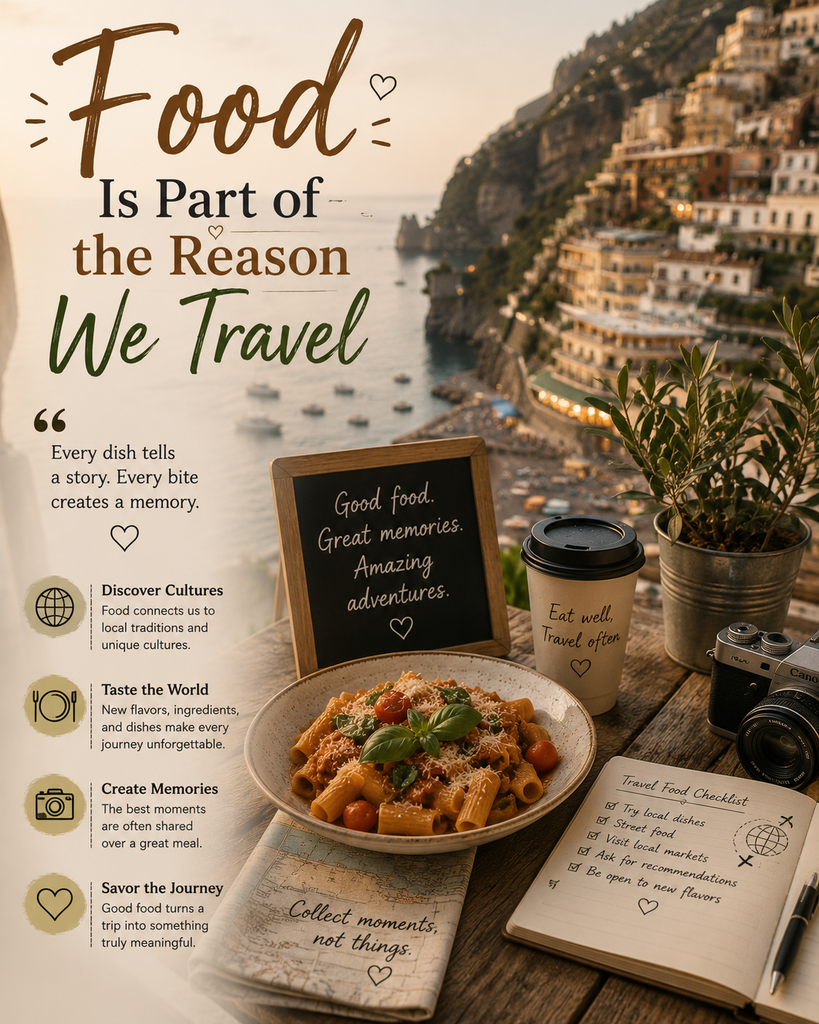
Food Is Part of the Reason We Travel
There’s something special about eating food where it actually belongs.
A dish you’ve seen hundreds of times online can feel completely different when you’re sitting in the place where it was created. The ingredients may be fresher, the preparation may be different, and sometimes you have no idea what you’re about to receive until the plate arrives.
That’s exactly why avoiding all unfamiliar food isn’t a great way to approach travel.
Try the local dishes.
If you’re concerned about eating well, look at the whole day rather than judging one meal. A rich lunch doesn’t mean dinner has to be another heavy meal. If you’ve had very little fruit or vegetables, choose some later. If you’ve been walking all afternoon, you may simply need a more filling meal.
There is no need to turn every restaurant decision into a nutrition calculation.
What I Would Actually Pack
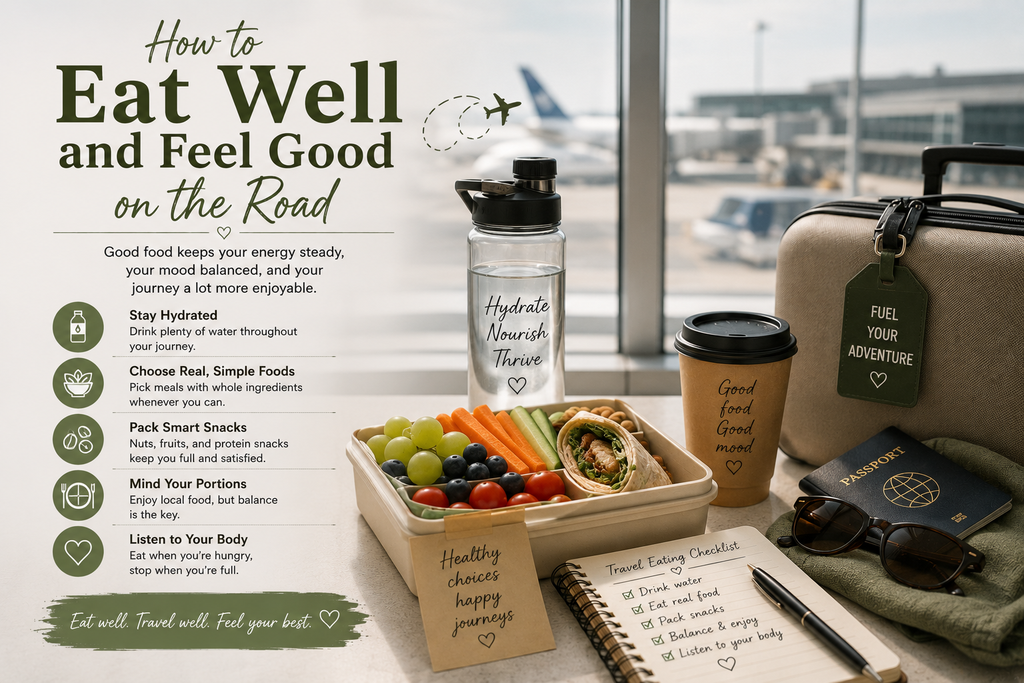
A healthy travel bag doesn’t need to look like a mini supermarket.
A reusable water bottle is probably one of the most useful things you can carry. Comfortable shoes are another obvious one, especially if your plans involve walking through cities or visiting outdoor attractions.
For longer journeys, a couple of simple snacks can be useful. Nuts, dried fruit, whole-grain crackers or another familiar option can help when the next proper meal is still several hours away.
If you take prescription medication, keep it organised and follow the storage instructions that apply to it. People with specific dietary requirements or allergies may also want to bring suitable snacks and learn how to explain their needs in the local language.
The trick is to pack for the trip you’re actually taking, not every possible disaster.
Don’t Underestimate Water
Water is easy to forget when there is so much else going on.
You leave your hotel early, visit a museum, stop for photographs, catch a train, wander through a market and suddenly it’s three in the afternoon.
Then you realise your last drink was at breakfast.
Hot weather and physical activity can increase fluid needs, so pay attention to thirst and local conditions. Follow local guidance about whether tap water is safe to drink, and use bottled or treated water where appropriate.
If you’re spending the day outside in a warm destination, take water with you rather than relying on finding somewhere to buy it later.
It sounds obvious, but obvious things are often the easiest to forget.
Walking Is One of the Best Parts of Exploring
You don’t necessarily need to find a gym while you’re travelling.
Some of the world’s most interesting places are best explored slowly, on foot.
Walking through an old neighborhood gives you a different view of a destination than sitting in a taxi. You notice small cafés, local shops, architecture and ordinary moments that you might otherwise miss.
A beach walk, nature trail, city walking tour or stroll through a market can add plenty of movement to your day without feeling like a workout.
Of course, don’t push yourself simply to hit a step target. Heat, altitude, terrain and your own fitness level all matter.
Sometimes the sensible choice is to take the bus.
Be Smart When Trying Street Food
Street food can be one of the highlights of a trip.
The smell alone can pull you towards a busy food stall.
There’s no universal rule saying street food is unsafe. What matters is paying attention to how the food is handled. A busy stall where food is being cooked fresh and served quickly can be a very different situation from food sitting out for long periods in the heat.
Look around before ordering.
Does the preparation area appear reasonably clean? Is the food being cooked properly? Are ingredients being kept at suitable temperatures?
If something doesn’t look right, you don’t have to take the chance.
There will always be another meal.
A Different Breakfast Can Be a Good Thing
Breakfast is one area where travelling can introduce you to completely new habits.
Maybe you’re used to toast and coffee, but your destination offers eggs, fresh fruit, beans, rice, soup or something you’ve never considered breakfast food before.
Try it.
You may find that the food you’ve been eating for years isn’t the only way to start a morning.
If you’re choosing from a hotel buffet, you don’t need to pile everything onto one plate just because it’s available. Take what appeals to you, eat slowly, and come back for something else if you’re still hungry.
Simple, but surprisingly effective.

Sleep Gets Complicated When You Travel
Jet lag can make an exciting trip feel strangely exhausting.
You arrive somewhere new and your body thinks it’s still three in the morning. Then, just as you’re getting used to the time zone, it’s time to fly home.
Give yourself some room to adjust.
If possible, don’t fill the first day with a huge list of activities. Light exposure during the day, regular meals and a reasonable sleep schedule can help your body settle into the new time zone.
And if you’re not travelling across time zones, the same principle still applies. A late dinner followed by several hours of sightseeing and very little sleep may sound exciting while you’re doing it, but your body will eventually ask for the bill.
You Don’t Have to “Be Good” on Holiday
This is probably worth saying clearly.
You don’t need to earn your holiday food.
You don’t need to walk ten thousand steps because you ate dessert.
You don’t need to feel guilty about ordering something you’ve been looking forward to.
Food has cultural, social and emotional value as well as nutritional value. Sharing a meal with people you care about is part of a good life.
If you normally eat a balanced diet, one week of trying local food isn’t going to erase everything you’ve done at home.
Enjoy the meal.
Then get back to your normal habits when you return.
Travel Can Give You New Ideas for Eating at Home
One of my favourite things about travelling is bringing small ideas back home.
Maybe you discover a simple breakfast you can recreate. Perhaps you try a salad dressing you’ve never made before. You find a new way to cook vegetables or discover that a handful of herbs can completely change an otherwise ordinary meal.
You don’t have to recreate an entire restaurant.
Sometimes one ingredient is enough.
A trip can change your relationship with food simply by showing you how many different ways people prepare and enjoy it.
Listen When Your Body Wants a Break
There’s always something else to see.
That’s the problem.
You might be standing in front of a famous landmark thinking about the next one. Then there’s a restaurant reservation, a market you wanted to visit, and a sunset viewpoint that is supposedly only twenty minutes away.
If you’re exhausted, stop.
Sit somewhere. Drink some water. Eat if you’re hungry. Give yourself half an hour without trying to achieve anything.
You didn’t travel all that way just to rush from one photograph to another.
Sometimes an unplanned coffee break ends up being one of the nicest memories of the trip.
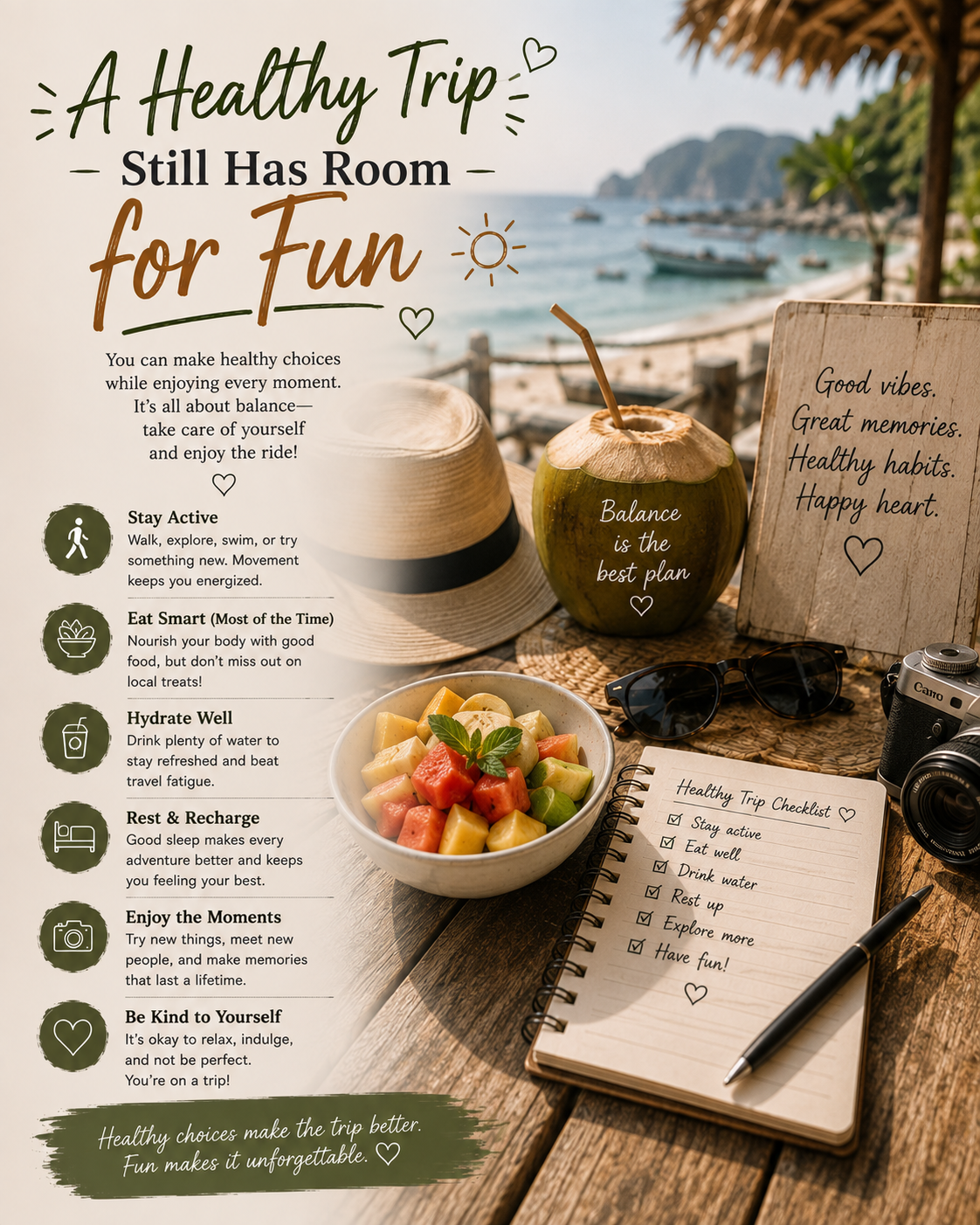
A Healthy Trip Still Has Room for Fun
Health and travel don’t need to compete with each other.
You can eat nutritious food and still try the local dessert. You can stay active without following a workout programme. You can take care of your sleep while staying out late one evening because the city looks beautiful at night.
The goal is balance, not perfection.
Pay attention to the basics, make sensible decisions when you can, and don’t let health rules become another source of stress.
Take the Good Habits Home With You
The real test of a good trip isn’t whether you followed a perfect routine.
Maybe you come home drinking more water because you realised how much better you felt when you stayed hydrated. Perhaps you start walking after dinner because you enjoyed exploring cities on foot. Maybe you add a new vegetable dish to your weekly meals after discovering it abroad.
Those are the habits worth keeping.
Travel gives us the chance to see different places, but it can also show us different ways of living.
You don’t have to copy everything you see.
Just take home the things that made you feel good.
Category: Health & Travel
Tags: Healthy Travel, Travel Tips, Nutrition, Healthy Eating, Wellness, Food, Lifestyle
Disclaimer: This article is intended for general informational purposes and isn’t a substitute for medical advice. Individual dietary, travel-health and medical needs vary. If you have a medical condition, food allergy, or specific health concern, speak with an appropriate healthcare professional before travelling.